Luxury Real Estate: The Thresholds of Luxury, Department by Department
Luxury real estate is not an absolute concept: it is always measured relative to a local market. Green-Acres’ Bonne Fortune 2025 Observatory quantifies this reality by defining “prestige” as a position within a department’s price distribution. The result: in some areas, you can enter the top 10% of the most expensive properties with less than 300,000 euros, while in Paris, budgets in the millions are required.
A segment that operates independently, far from the “standard” market
While the traditional residential real estate market is stabilizing, the luxury market continues to follow its own trajectory. The observatory reports a 9.7% increase in demand for luxury real estate in 2025. The reason is simple: when budget is not the limiting factor, the decision to purchase is less influenced by credit conditions and more by scarcity, the property’s intrinsic quality, location, intended use (second home), or its role as a long-term asset (for inheritance or estate planning).
This autonomy does not mean that the segment is “immune.” It follows its own cycles—which are often slower—and specific liquidity criteria: an exceptional property may sell very well… but it may also take time to find a buyer if the local market is limited. This is precisely the value of a percentile-based approach: it provides a benchmark for comparing regions that do not have the same depth of demand.
Two national benchmarks for objectively measuring prestige
To make the concept comparable, the study uses two benchmarks: the top 10% and the top 1% of the most expensive properties. Nationally, the threshold for entering the top 10% is 862,000 euros, and that for the top 1% is 3.29 million euros. But these benchmarks take on different meanings depending on the region. In departments where demand for luxury properties is massive, the thresholds automatically rise: the Alpes-Maritimes and Var departments account for more than half of all luxury property inquiries, with market shares of 30.5% and 22.4%, respectively.
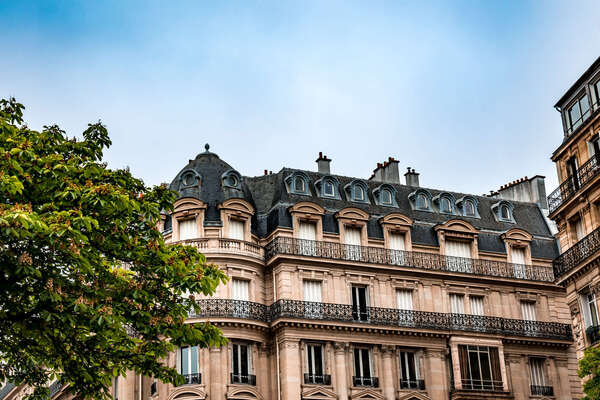
The capital exemplifies the extremes of this distribution: 1.9 million euros to enter the top 10 percent and 11.7 million to reach the top 1 percent. At the other end of the spectrum, in departments like Meuse, Creuse, or Mayenne, you can make it into the local top 10% with a budget of less than 300,000 euros. Put another way: “prestige” means first and foremost “high-end,” and only then “very expensive.”
A Geography of Luxury to Incorporate into Wealth Management Advice
The thresholds vary significantly from one department to another. In Haute-Savoie, the top 10% starts at 1.39 million euros and the top 1% at 4.6 million. In Bouches-du-Rhône, these thresholds stand at 1.79 million and 4.95 million. In Dordogne, the top 10% is accessible starting at 599,000 euros.
Geographic mobility remains one of the most powerful tools for building wealth. Moving to a new region can sometimes provide a higher quality of life for the same budget, as well as access to markets that differ significantly in terms of seasonality, depth of demand, and liquidity. These thresholds therefore provide a practical tool for framing key questions: What is the holding period? How important is resale value? What is the balance between personal use and seeking appreciation? And, above all, what is the “true” comparable market: that of the county, the municipality, or a very specific micro-neighborhood?
The tool also has its limitations, which the study urges us to keep in mind: being in the top 10% says nothing, in and of itself, about the architectural quality or condition of the property; it merely indicates that it is expensive relative to its surroundings. For real estate management, this is precisely what matters at the outset: establishing a numerical benchmark to discuss a project, then refining it based on local market conditions and usage criteria. In practice, these benchmarks also help avoid a common bias: applying Parisian assumptions to smaller markets, where value depends more on scarcity and actual demand than on the “price per square meter.”
Source: Bonne Fortune 2025 Observatory, Green-Acres.