Real Estate: Cities Where It's Still a Good Time to Buy—and the Others

Does it still make sense to buy a home today, despite high financing costs? Is renting ultimately a better option?
For households that have the financial means to buy an apartment or a house, the question arises. Answering it is by no means straightforward. In addition to the rent saved, financing costs, and other expenses associated with homeownership, one must also consider how real estate prices will change over the next few years.
However, for prospective homebuyers—for whom their primary residence often represents a significant portion of their net worth—accurately assessing the financial benefits of homeownership becomes a crucial consideration. To shed new light on this issue, Wüest Partner France, an independent Swiss-based real estate consulting, appraisal, and services firm, sought to determine what price trends would be necessary for the purchase of an apartment or house to be, under current conditions, more cost-effective than renting. Results: When comparing the costs of renting versus owning across all French municipalities, renting appears to be more advantageous in France’s 10 largest cities. Analysis…
In large cities, the balance tips in favor of renting
In France’s 10 largest cities, the costs of homeownership exceed those of renting, as shown in the table below. For example, a Parisian homeowner with a 65-square-meter apartment will pay approximately 37,500 euros in annual expenses—7,800 more than a renter for the same apartment. The difference is less pronounced in Lille, Marseille, and Strasbourg, where a homeowner will pay only about 2,000 euros more than a renter.
Bordeaux: The Least Affordable City for Homeownership
In major cities, buying a home is profitable only if its value increases enough over time to offset the additional costs associated with homeownership. Bordeaux has the highest annual rate of appreciation required to make homeownership profitable, at 1.6%. This is due, on the one hand, to the high cost of apartments (the ratio of purchase price to annual rent is 22, the highest figure after Paris), and, on the other hand, to a high property tax: the property tax rate is 46.6% in Bordeaux, compared to a national average of 35.6% and just 14.1% in Paris. In Marseille, an annual appreciation of 0.6% would be enough to make buying a good deal. Despite high property taxes, apartment prices there are relatively low (a price-to-rent ratio of 17.6), making the costs of homeownership more affordable.
A Changing Market in Paris
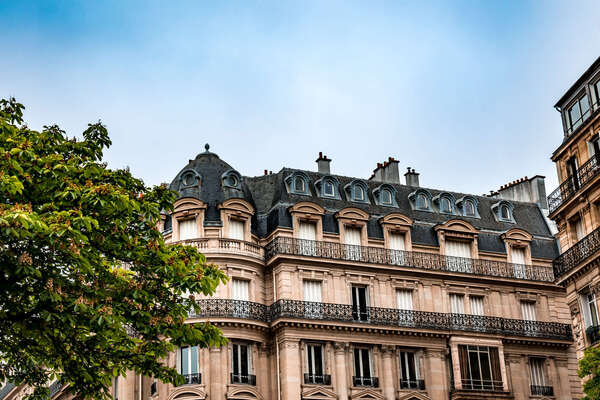
In Paris, the city’s exceptional appeal has led to a surge in real estate prices. Despite the recent decline in prices (down 5.3% year-over-year as of the third quarter of 2023), the cost per square meter remains extremely high (10,400 euros). This situation results in considerable financing costs, making purchasing less attractive. Nevertheless, the rental market is also very tight in Paris. Demand is massive and supply is limited, a situation exacerbated by the impact of the Olympic Games: many landlords prefer to rent out their furnished apartments on a short-term basis at exorbitant prices during the Games rather than list them on the traditional rental market. Furthermore, the ban, effective January 1, 2023, on renting out energy-inefficient homes (“thermal sieves”) has further reduced the supply of rental housing. Between the emerging decline in property prices and the surge in rents, the balance may shift in favor of homeownership in the Paris region over the coming months.
The required increases in value are moderate
Finally, it is worth noting that, from a historical perspective, the increases in property values required to make real estate investments profitable in major cities do not appear to be excessive. Paris, Lyon, and Marseille have, in fact, recorded average annual real estate price growth exceeding 5% over the past 25 years, despite periods of price declines, such as during the 2008 financial crisis. It is therefore not unrealistic to anticipate value increases of more than 1–1.5% per year when considering a long-term investment horizon of 20 years.
In most departments, homeownership remains advantageous. When considering the entire territory of France, the picture is quite different from that of major cities. In some 80% of municipalities, the annual costs associated with buying an apartment or a house are lower than those of renting, despite the sharp rise in interest rates.