
Vacation Homes: The Cost of Keeping the Shutters Closed
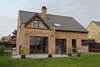
France has 3.8 million second homes, and no one knows exactly how many days they are actually occupied. Their cost, on the other hand, is easy to quantify, and the tax rules have become significantly stricter.
As of January 1, 2025, INSEE counted 3.8 million second homes, representing 9.8% of France’s housing stock. This figure, often rounded to four million, actually combines second homes in the strict sense with occasional residences—that is, professional pied-à-terres. The number of true vacation homes is therefore lower.
The housing stock, however, is no longer growing. After strong growth between 2011 and 2017, it has remained stable. Meanwhile, the housing stock includes 3 million vacant units—a category that should not be confused with the previous one: a second home is furnished and occupied intermittently, while a vacant unit is not occupied at all, and the two are subject to different tax treatments.
As for the average occupancy rate, it is simply unknown. The figures circulating—often around 40 days a year—are not backed by any identifiable study. INSEE states this clearly in its study on Savoie: tax records “do not provide information on the occupancy of second homes, their use, or related expenses.” The census records a status; it says nothing about usage.
A Highly Concentrated Geographic Distribution
About 40% of second homes are located on the coast, and 16% to 20% are in the mountains. In Corsica, one in three homes is a second home. In Le Touquet-Paris-Plage, eight out of ten homes are second homes.
The profile of the owners is just as clear. Two out of three second homes belong to a household whose head is 60 years old or older, compared to 38% for primary residences. For 38% of them, the distance from the primary residence exceeds a three-hour drive.
The tax bill has changed on a different scale
The housing tax on second homes has survived the elimination of the tax on primary residences. It averages around €1,000 and increased by 7.1% in 2025.
It’s the surcharge that makes the difference. Municipalities located in high-demand areas can apply a surcharge ranging from 5% to 60%. A decree issued in August 2023 increased the number of eligible municipalities to approximately 3,700, including 2,259 tourist municipalities in the southeast, the Alpine region, and coastal areas. Local governments have embraced this measure en masse: according to the DGFiP, 1,628 municipalities applied the surcharge in 2025, compared to 255 in 2022. The national average rate stands at 41.4%, and 657 municipalities have adopted the maximum rate of 60%, including Paris, Lyon, Bordeaux, Nice, Marseille, Montpellier, La Rochelle, and Rennes.
Renting, yes, but under which tax regime
Seasonal rentals have lost a significant portion of their tax advantage. Since the law of November 19, 2024, an unclassified furnished tourist rental falls under the “micro-BIC” regime with a 30% tax deduction and an income cap reduced to €15,000, compared to 50% and €77,700 previously. A classified furnished tourist rental retains a 50% deduction, with the revenue cap raised to €83,600 for 2026 income. This creates a strong incentive to have one’s property classified.
At the same time, administrative oversight has been tightened. Since May 20, 2026, registration has been mandatory throughout France via a single national portal. Municipalities may cap the number of permits, and those with at least 20% second homes may include a provision in their local land-use plan restricting new construction to primary residences. In condominiums, the ban on furnished vacation rentals now requires a two-thirds majority, as opposed to the previous requirement of unanimity.
The “mobility lease” and its limitations
Created by the ELAN Act of 2018, it offers landlords what a traditional lease does not: the certainty of getting their property back. The term ranges from one to ten months and is non-renewable. At the end of the term, the tenant must move out without having to give notice or provide a reason. The unit must be furnished; security deposits are not permitted—the Visale guarantee serves as a substitute—and no administrative authorization is required.
The challenge lies in the strictly limited pool of eligible participants: students, apprentices, interns, civic service volunteers, and individuals in vocational training, on transfer, or on temporary assignment. This pool is concentrated in urban and employment areas. In a coastal or resort town, the program is not very effective.
That leaves long-term rentals, which generate the most stable income but result in the loss of access to the property. This has a significant tax implication: if the tenant establishes this as their primary residence as of January 1, the owner is no longer liable for the housing tax on second homes or its surcharge. That was precisely the legislature’s intention.