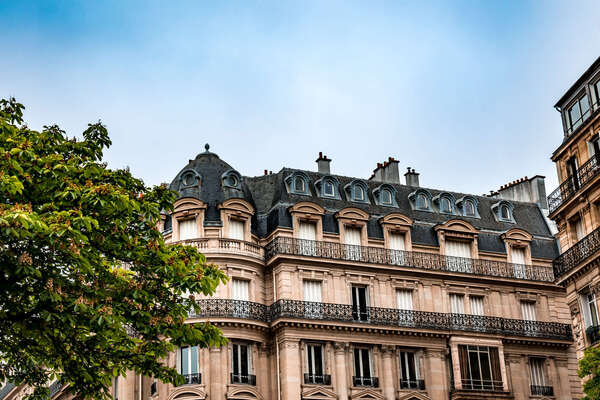
Luxury Real Estate: Paris Cedes Its Position as France's Leading Market to the Coast

A Belles Demeures study covering ten years in the high-end real estate market reveals a shift: the capital, which accounted for nearly one-third of luxury transactions in 2015, will fall behind the Atlantic Coast and the French Riviera by 2025.
For a long time, the French luxury real estate market was synonymous with a few Parisian arrondissements. That is no longer the case. According to a study released by Belles Demeures, the SeLoger Group’s high-end real estate portal, during its annual press conference, Paris and its surrounding region accounted for nearly one-third of the value of French luxury real estate transactions in 2015. Ten years later, that share has fallen below 24%. The capital itself now accounts for only 14% of the market, having been surpassed by the Atlantic Coast and the French Riviera, which each account for 15%.
Paris’s relative decline does not indicate a slump in the segment—quite the contrary. The luxury market has weathered the rise in interest rates and the instability of recent years better than the rest of the residential market. It now accounts for more than 39 billion euros in transactions, representing nearly 17% of the total value of the French real estate market. What the study reveals is a geographic shift in wealth and preferences: affluent buyers are increasingly favoring the coast, the mountains, and the regions over Paris’s historic center.
Normandy and Provence Lead the Way in Price Increases
This shift is taking place against a backdrop of unprecedented uncertainty for households. Geopolitical tensions, the return of inflation, a sharp rise in interest rates, an economic slowdown, and political instability have, over the past five years, upended the traditional benchmarks of the real estate markets. Amid this turbulent cycle, the high-end market has served as a safe haven, less exposed than the mainstream homebuying market to credit market fluctuations. It is this relative resilience that has allowed the segment to absorb the shock while expanding into new territories.
The price map confirms this rebalancing. Over the past ten years, the strongest growth has been seen in Normandy and Provence, both at 49 percent; on the Atlantic Coast at 48 percent; in the Alps at 45 percent; and in Brittany at 41 percent. Conversely, the historically most expensive markets are growing more slowly: 29 percent in Paris and 30 percent on the French Riviera. This disparity in growth rates reflects a catch-up by regions long considered secondary, driven by a search for space, nature, and quality of life—a trend born of the widespread adoption of remote work and accelerated by the health crisis.
This trend is driven by a more profound transformation of the nation’s wealth. Since 2020, the share held by the wealthiest households has risen from 41.3% to 47.1% of French wealth. This growing concentration supports a luxury market that is less exposed to traditional real estate cycles: while rising interest rates have dampened the ordinary homebuying market, high-end buyers—who are often less reliant on credit—have continued to purchase. The segment has thus returned to a solid level of activity, driven by demand that is spreading across the entire country rather than being confined solely to traditional high-demand areas.
The 2027 Presidential Election in the Crosshairs
Politics remains a major unknown. According to the OpinionWay survey conducted for Belles Demeures, 31% of homebuyers surveyed say they might adjust their real estate plans depending on the outcome of the 2027 presidential election. This figure highlights this clientele’s sensitivity to tax and wealth management policies: in a market where the amounts involved run into the millions, a shift in capital or real estate taxation policies could be enough to delay or reorient a purchase—or even cause a project to be moved abroad.
The portal, which reports 4 million monthly visits—up 26% year-over-year—and nearly 70,000 online listings, interprets these figures as signaling the end of a model centered on the capital. The French luxury real estate market is now just as prevalent along the Atlantic and Mediterranean coasts, in the Alps, and in Normandy as it is between the Seine and the Luxembourg Gardens. This territorial shift could be further accentuated by upcoming tax reforms.