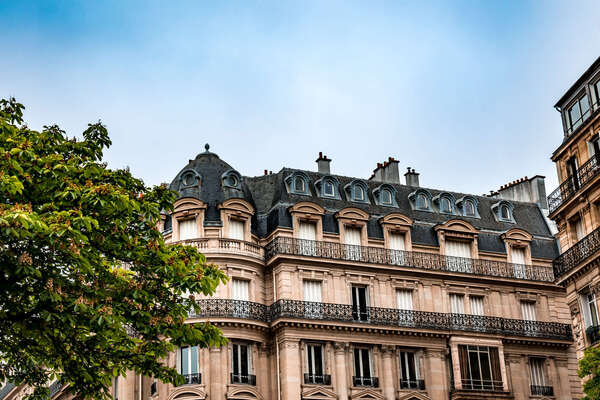
Real Estate: Delays Are Lengthening and Pushing Prices Down

In major cities, it’s taking longer and longer for properties to sell. Montpellier takes the cake, where it now takes an average of three months.
According to the latest price data from MeilleursAgents, real estate prices are stabilizing or even falling in most major cities.
In the Top 10 cities (excluding Paris) and the Top 50 cities, prices per square meter fell once again in February. However, this decline remains very slight (–0.1% on average), continuing the trend that began in previous months. In fact, prices had fallen by only 0.2% in December and January in France’s ten largest cities. And they fell by only 0.2% and then 0.1% over the same period in the Top 50 cities.
Of course, all of this is an average, and each city has its own unique characteristics. A few examples? Rennes (+0.1%), Nantes, Lyon (+0.2%), Lille, and Montpellier (+0.3%) stand out for their positive trends. Meanwhile, others continue their slow decline.
This is once again the case in Bordeaux (-0.9%), as well as in Strasbourg and Toulouse (-0.8%).
What about rural areas? They’re losing steam and experiencing a price decline not seen since 2015: down 1.7% in six months. Our economists are calling it a “return to normal” after years of post-pandemic euphoria.
Tensions in the Paris Real Estate Market
In Paris, real estate prices fell another 0.7% in February. Over the past year, Parisian properties have lost 6.6% of their value on average! Even more concerning is that the monthly rate of decline is even higher than last year, when Paris was losing 0.5% on average per month.
But the capital’s most upscale neighborhoods remain popular. And for now, they have been spared from this downward trend. In the very heart of the city, prices are even continuing to rise. Take the 8th arrondissement, for example, which has seen a 3.2% increase over three months.
In major cities, 7 out of 10 properties are sold at a discount. Is that enough to get the market moving again? Not really, according to the data team at MeilleursAgents, which notes that average time-to-sale figures are particularly high this month.
In France’s eleven largest cities, this average time was 77 days as of March 1, 2024, compared to 59 days exactly one year ago. That’s nearly three additional weeks. A closer look also reveals that in these same cities, the average time on the market is more than two months in every case. What does this mean? It means that sellers who can afford to wait prefer to do so rather than “sell off” their property at a discount.
The prize for the longest time to sell goes to… Montpellier. Here, it now takes an average of 90 days to sell a home—14 days longer than three months ago. In this city more than anywhere else, sellers clearly do not seem willing to accept current market conditions.
Over the same period, Bordeaux and Toulouse saw their average selling times increase by 15 and 10 days, respectively, reaching 85 and 86 days on average as of March 1.
Real estate prices in Montpellier have risen by 2% over the past year. However, with sales taking so long, the outlook for the city is not promising. Indeed, if buyers do not quickly regain greater purchasing power in the real estate market, some sellers will ultimately be forced to lower their prices.
In Bordeaux, Toulouse, and Paris, homebuyers are regaining their purchasing power in the real estate market
Are you one of those who received a pay raise this year? If so, you should know that this good news, combined with a slight improvement in credit conditions (a 0.25-point decrease between December 2023 and February 2024, according to the mortgage broker Empruntis), could allow you to gain a few square meters of purchasing power at the start of the year.
In this regard, Bordeaux, Toulouse, and Paris are performing the best (which makes sense, since prices have fallen the most in those cities). Here, you’ll see an increase in real estate purchasing power of +9.6%, +9.3%, and +8.7%, respectively, compared to the last quarter of 2023.
The decline in real estate prices that began with the rise in interest rates is significantly helping to restore the purchasing power that existed in 2022. For example, with prices down more than 10% since January 2022, Paris had a real estate purchasing power of 28 square meters as of March 1, 2024. This is only 1 square meter less than two years ago. Similarly, in Lyon (-6.2%) and Bordeaux (-7.5%), buyers have nearly regained their January 2022 level of purchasing power (within 4 square meters).
But there is still a long way to go: over the past two years, household purchasing power has declined significantly. Only Toulouse (52 m²) and Nantes (55 m²) offer purchasing power exceeding 50 m². Rennes, Lille, Montpellier, and Marseille are out of the picture. According to our experts, prices would need to fall another 17% for French households to regain the same level of housing purchasing power they had before mortgage rates rose. In other words, that’s not going to happen anytime soon.
Methodology
Housing purchasing power refers to the number of square meters that a household consisting of two adults—with an income equal to the median income adjusted for their city of residence—can purchase using a mortgage (excluding a down payment).