
Summer Fires: What Home Insurance Covers
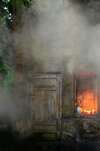
More than 220,000 people were evacuated this summer in southwestern France. On the ground, insurers issued nearly 1,000 virtual payment cards each day to prevent those affected from having to pay out of pocket. This has been a quiet transition, even as questions about coverage and premiums will arise once school starts again.
The summer of 2026 will be remembered for wildfires of exceptional magnitude, particularly in the Southwest, where more than 220,000 people had to be evacuated as a matter of urgency. Prolonged drought, strong winds, and repeated heat waves: these weather conditions strained all emergency response, shelter, and support systems to their limits. For insurers, the event served as a real-world test of their ability to handle tens of thousands of claims within a matter of days.
The operational response relied in part on a tool that is still relatively unknown to the general public: the virtual payment card for specific purposes. The platform developed by the French startup Eyst, founded in 2022, enabled teams at several insurance and assistance companies operating in France to issue nearly 1,000 cards per day to immediately cover the costs of emergency housing, hotel stays, meals, clothing, hygiene products, and essential supplies.
Help That Arrives Before You Spend
This approach reverses the traditional logic of reimbursement. Rather than paying out of pocket, keeping receipts, and waiting for a refund, the insured person receives a link via text message or WhatsApp during their call with the assistance platform. The card is added to the user’s phone wallet in just a few seconds—via Apple Pay or Google Pay—and works immediately both online and in stores on the Mastercard and Visa networks. No app to download, no account to create, and no cash advance required.
For the insurer, the benefit lies in the card’s specific purpose. Each card is configured at the time of issuance based on the activated coverage: exact amount, validity period, and, most importantly, authorized merchant categories: hotels, groceries, clothing, pharmacies, and transportation. A card issued for emergency housing will work at a hotel—and nowhere else. Transactions are visible in real time; any unused funds are automatically returned to the insurer when the card expires; and all expenses remain traceable for the technical and accounting management of claims.
“In the face of a crisis of this magnitude, the speed of assistance is just as critical as the amount provided,” summarizes Arnaud Brodzki, CEO and co-founder of Eyst, a company that reports deployments at Generali and Groupama.
Questions Fire Victims Will Ask When School Starts Again
Once the emergency has passed, it will be time to sort out the claims. And at that point, several issues deserve clarification, as highlighted by LeLynx.fr, whose CEO, Arthur Martiano, has offered to provide an update on the actual coverage provided by insurance policies. First point to note: contrary to popular belief, wildfires are not classified as natural disasters. They are covered by fire insurance—a core component of any comprehensive home insurance policy—without the need for a natural disaster declaration, which, in practice, speeds up the claims process.
There are still many gray areas. What exactly does the coverage include: a burned-out roof, but also damage caused by heat, smoke, and soot that has seeped in, the destruction of electrical equipment, and damaged furniture? Is a burned-out vehicle near the home covered by home insurance or the fire coverage under the auto policy, and what is the compensation amount? Does the insurance cover emergency housing if the home has become uninhabitable, and for how long? Is there a coverage limit, and does it adjust based on the severity of the incident? These are all questions answered in the policy’s specific terms and conditions—which few policyholders have read before a claim occurs.
As for the procedure, the rules are consistent: you must report the claim to the insurer within five business days of becoming aware of the incident—by phone, through the customer portal, or by certified mail—and compile a file of supporting documentation: photos of the damage, purchase receipts, repair estimates, and a certificate or report from emergency services. The older and more complete the documentation of your personal property, the faster you’ll receive compensation.
Finally, a fundamental issue related to property insurance will arise in the medium term: the cost of coverage. The recurrence of weather events in certain areas (the outskirts of Marseille, forested communities in the Southwest) automatically drives up the claims rate and, over time, home insurance premiums—and may even affect the insurability of certain properties. For a homeowner, this is now a factor that goes into calculating the value of a real estate asset, just like the Energy Performance Certificate (DPE).




